Does the ordinary job work?
Use a representative case and a clear expected result.

AI EVIDENCE
Choose one workflow. Define what success means. Test a normal case, an edge case and a break case. See what the available evidence supports before deciding what to fix.
No sales call is required to use the free self-guided teardown. Its verdicts come from the observations you enter; it does not inspect your systems.
EVIDENCE FIRST. REMEDIATION SECOND.
Use a representative case and a clear expected result.
Try a plausible exception, incomplete input or unusual constraint.
Try a case that should be refused, flagged or handed to a person.
For each case, record the input, expected behavior, observed behavior and evidence. Mark PASS, FAIL or UNKNOWN. An untested case stays UNKNOWN.
PAID PROFESSIONAL REVIEW
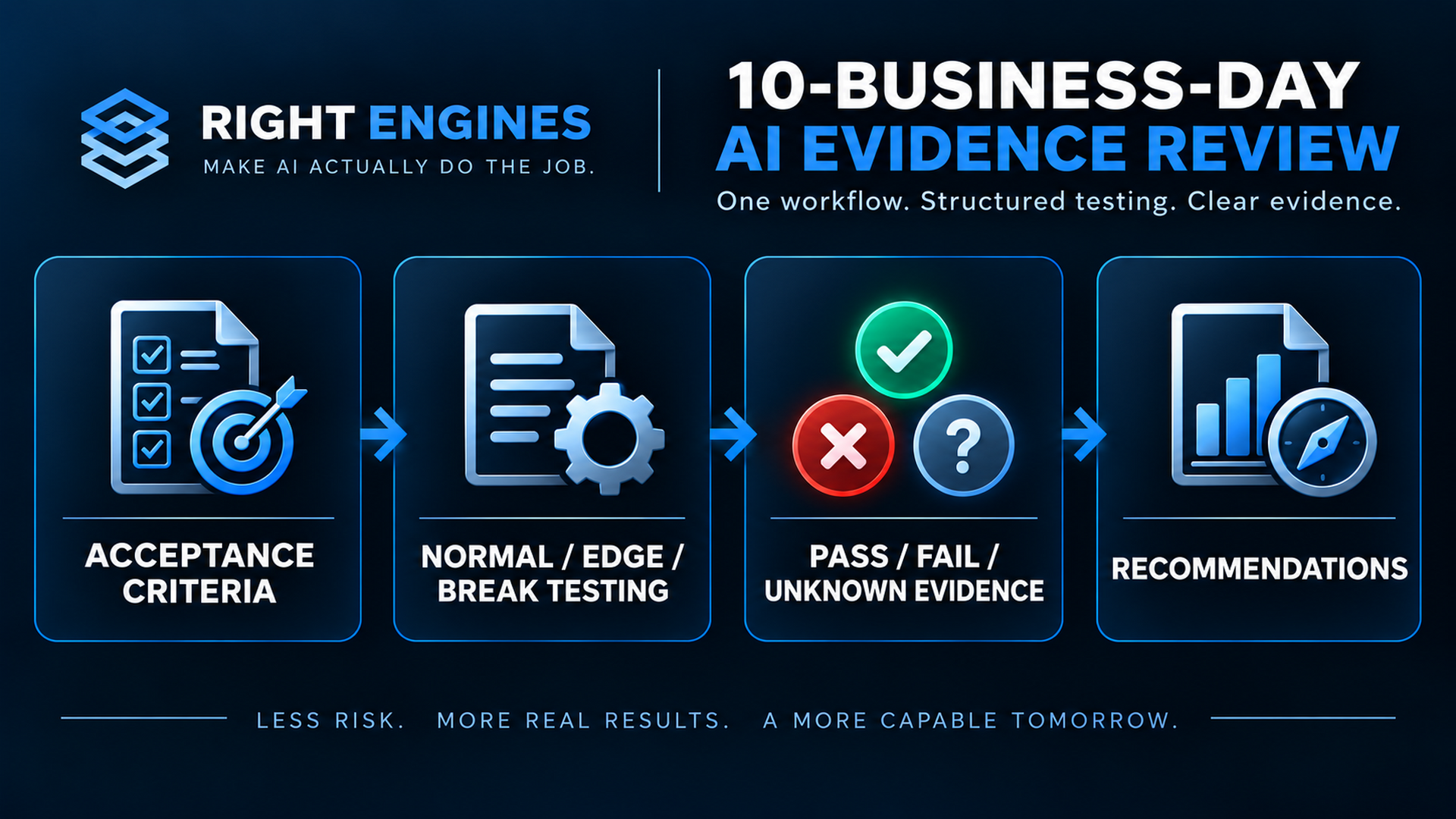
For one agreed workflow, we define acceptance criteria, run structured normal, edge and break testing, record PASS / FAIL / UNKNOWN with supporting evidence, and recommend the smallest justified next step.
$7,500 for the one-workflow review. Scope, inputs, access and the start date must be agreed before the 10-business-day review begins. A review does not promise that the workflow will pass or that remediation is included.
The paid intake and fulfillment path is being verified in recovery staging. This page does not take payment or represent a booking as accepted.
AFTER THE EVIDENCE
Correct instructions, input handling, review steps or acceptance checks when a focused change is enough.
Design and validate a new engine when the current workflow cannot do the job reliably.
An OBZ may help coordinate a larger remediation. It is one possible method, chosen after the evidence.
Then retest against the same acceptance criteria and record what changed.